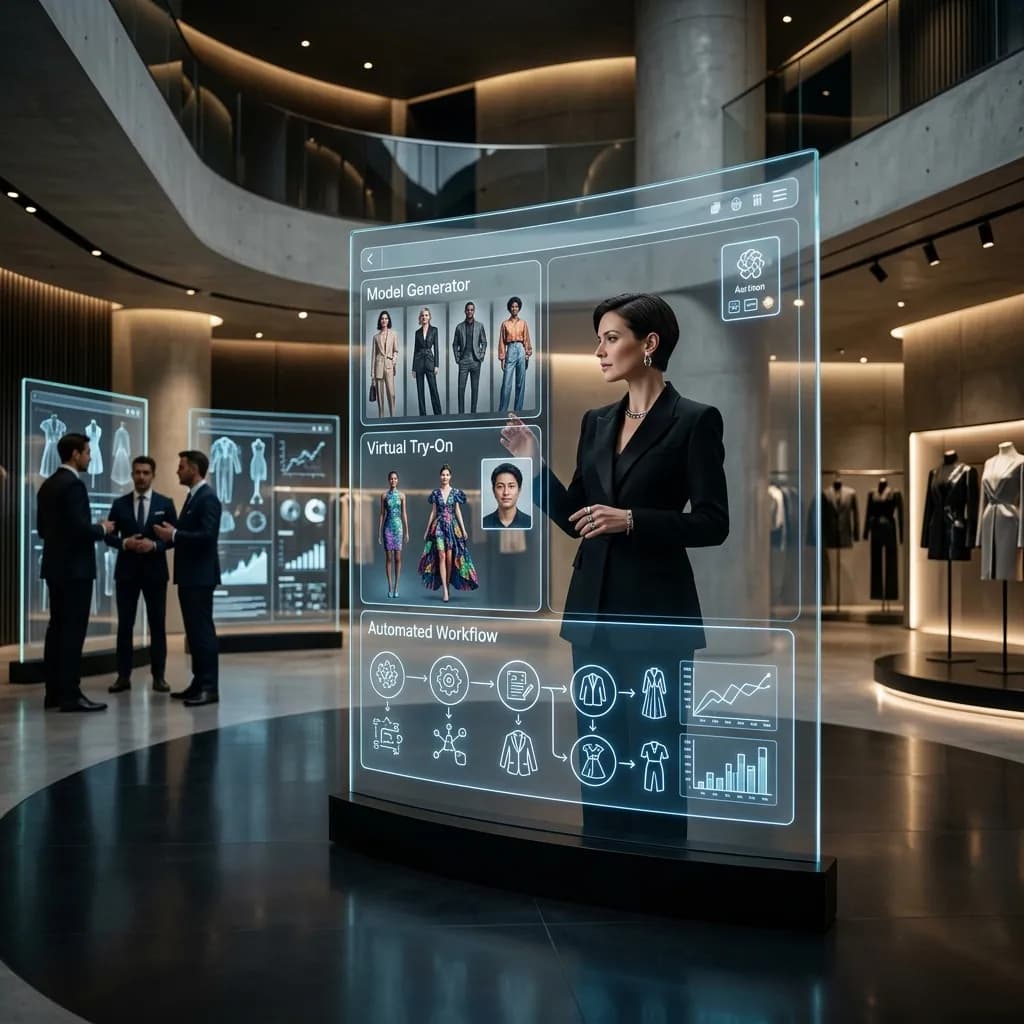
The Best AI Tech Stack for Fashion
From virtual model generators to content engines, we review the essential AI fashion tech stack.
The Fashion Tech Stack of 2026
The fashion industry has officially entered its "Generative Era." In 2026, a brand's competitive advantage is no longer just the quality of its designs, but the efficiency of its digital content engine. As e-commerce platforms and social channels demand a constant stream of high-fidelity visuals, the tech stack you choose can make or break your growth trajectory.
This guide provides an exhaustive review of the top AI tools currently transforming fashion. We move beyond the hype to evaluate which software provides real, measurable value for e-commerce founders and brand managers.
Why Fashion Brands Are Adopting AI Tools
The adoption of AI is not a trend; it is a response to the "Content Crunch." With the rise of hyper-personalized marketing and 24/7 social cycles, the old way of doing things has become a liability.
Operational Benefits
- 90% reduction in production lead times.
- Elimination of physical studio overheads.
- 24/7 autonomous content generation.
Growth Benefits
- Higher conversion through diverse model sets.
- Real-time A/B testing of ad creatives.
- Instant localization for global markets.
Categories of AI Fashion Tools
To build a winning stack, you must understand the different classes of technology available today. Not all AI tools are created equal, and most serve very specific parts of the value chain.
1. AI Fashion Photoshoot Tools
These are the heavy hitters. They replace the entire physical photography process, allowing you to generate campaign-ready images from simple product shots. This category is dominated by specialized platforms like Modelfy.
2. AI Model Generators
Focused purely on creating virtual humans. While useful for creative projects, many lack the "garment integrity" needed for actual e-commerce sales.
3. Virtual Try-On (VTO)
Tools that allow customers to "wear" clothes digitally on their own photos. These are great for reducing returns but require high technical integration on the storefront.
4. AI Marketing Automation
Software that takes your raw assets and automatically formats them for Instagram Reels, TikTok ads, and Google Display networks.
Comparing the Top AI Fashion Tools
Modelfy: The Premier Fashion Content Engine
Modelfy stands as the definitive choice for brands that prioritize photorealism and garment accuracy. Unlike generic tools, Modelfy was engineered from the ground up for apparel.
- Strengths: Unrivaled garment retention, one-click model generation, and no technical prompt knowledge required.
- Ideal Use Case: Scaling e-commerce catalogs and high-velocity social media ads.
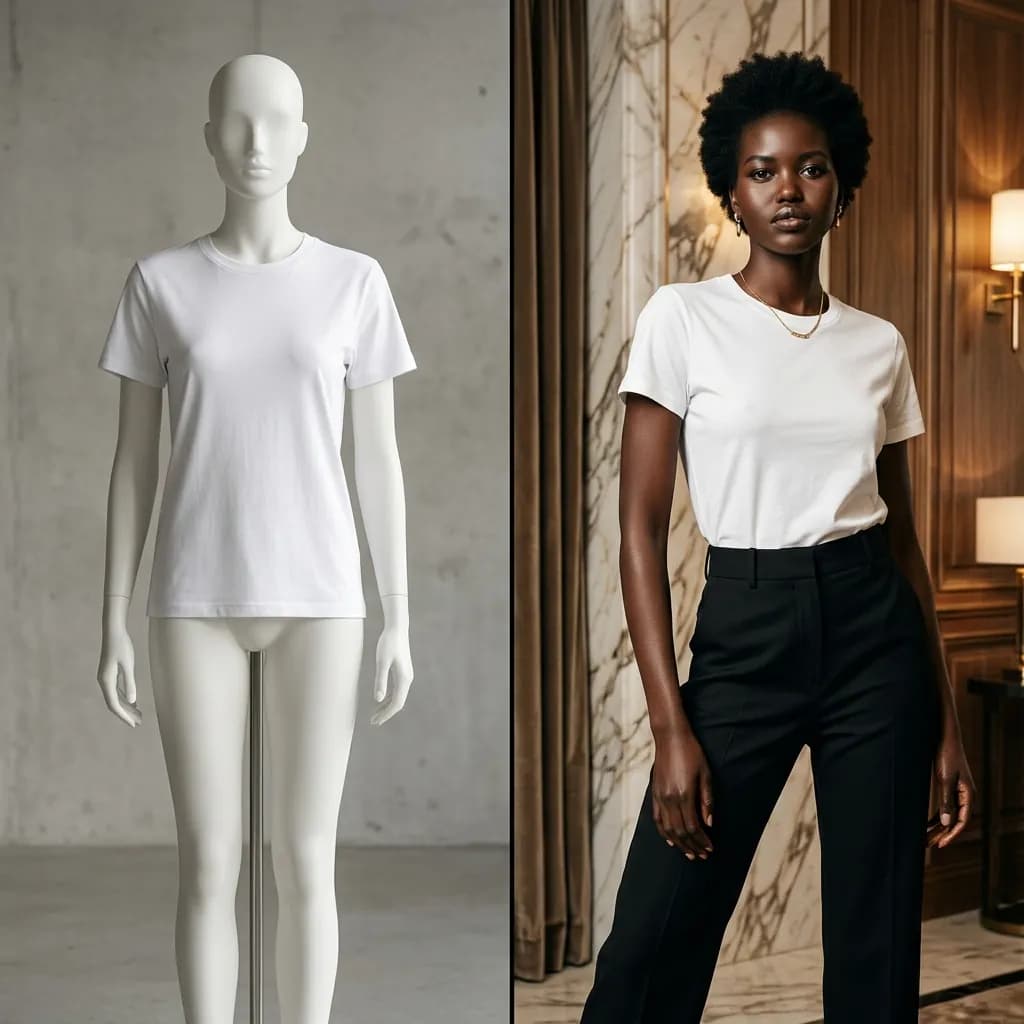
Fig 1.1: The transformation of a raw garment photo into a photorealistic campaign asset using Modelfy's AI model generator.
Adobe Firefly (Generative Fill)
Adobe has integrated AI directly into Photoshop. While powerful for editing existing photos, it is still a manual tool.
- Strengths: Familiar interface, great for minor retouches.
- Limitations: Cannot generate a full photoshoot from scratch; requires professional design skills.
Midjourney / Stable Diffusion
The industry standard for artistic exploration. These tools are incredible for mood boards but notoriously difficult to use for actual products.
- Strengths: Infinite creative freedom.
- Limitations: Hallucinations make it nearly impossible to preserve the actual texture and design of a specific garment.
Problems With Most AI Fashion Tools
If you have experimented with AI before, you have likely encountered the "Hallucination Problem." Most tools are trained on generic internet data, not fashion-specific physics.
| The Problem | The Reality in 2026 |
|---|---|
| Complex Prompting | You shouldn't need to be a "Prompt Engineer" to get a photo of a dress. Most tools require 50-word commands to get one usable result. |
| Garment Distortion | Generic AI often changes the number of buttons, the collar shape, or the fabric texture. This is a deal-breaker for e-commerce. |
| Inconsistent Branding | It is nearly impossible to get the same "Model" or "Studio" across 50 different product shots using general-purpose AI. |
Why Modelfy Stands Out
This is where the distinction between "AI Art" and "AI Commerce" becomes clear. Modelfy was built to solve the specific pain points of fashion brands.
100% Garment Integrity
Our proprietary architecture ensures that the garment you upload is exactly the garment that appears on the model. We preserve the stitching, the logos, and the fabric drape with zero distortion.
Global Localization at Scale
Imagine launching a campaign in three continents on the same day. With Modelfy, you can render your collection on diverse models in Tokyo, London, and New York environments simultaneously.
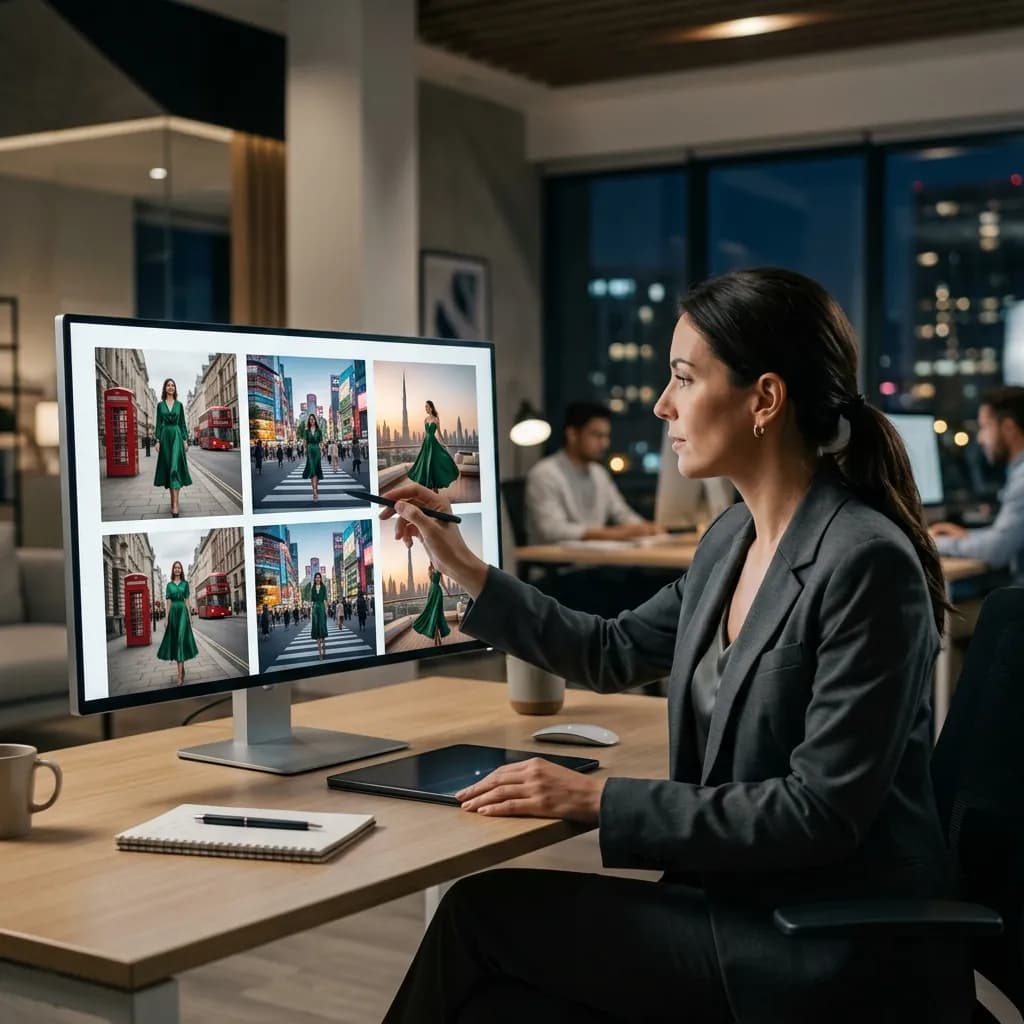
Fig 1.2: One product, infinite locations. Modelfy allows brands to instantly localize their marketing for global audiences.
One-Click Simplicity
We have eliminated the need for complex prompting. Modelfy uses a high-end "Point and Click" interface designed for marketing teams, not technical developers.
If you are looking for the best AI fashion model generator to scale your brand, look no further than Modelfy.
Start your 1-click AI fashion photoshoot with Modelfy today.
The Future of AI in Fashion
As we look toward 2027 and beyond, the role of AI will only expand. We are moving toward a world where the storefront is entirely dynamic.
- Virtual Influencers: Brands will own their own AI models, creating a consistent face for their community that exists entirely in the digital realm.
- Automated Personalization: Imagine a website that shows every product on a model that looks exactly like the person browsing. This is the future of conversion optimization.
- AI-Generated Video: We are already seeing the first generation of high-fidelity AI fashion videos. Soon, your entire commercial will be generated from a few static photos.
Conclusion: Build Your Digital Studio Today
The "Top AI Tools" list will continue to evolve, but the underlying trend is clear: physical constraints are becoming optional. For the fashion brand of 2026, the digital studio is the primary engine of growth.
By integrating specialized tools like Modelfy into your workflow, you are not just keeping up with the competition, you are outscaling them. You are building a brand that is faster, more inclusive, and infinitely more creative. The future of fashion isn't coming, it's already here, and it's powered by AI.

Haziq Qasmi
Read More
Related Insights
Deep dive into more AI fashion photography guides and industry shifts from the Modelfy team.
Your Product Page Hero Image Is Losing You 34% in Conversions
Static flat-lays and sterile white studio hero images kill apparel conversions. Here is what A/B testing 500 PDPs revealed about visual hierarchy.

Why a $5,000 Photoshoot Only Gives You 14 Days of Meta Ads
Meta algorithms burn fashion photoshoot assets in 14 days. Here is why creative velocity determines your ROAS and how to scale ad creative.
Stop Waiting for Factory Samples. It's Costing You $8,400 a Drop.
Waiting weeks for overseas factory samples is killing your store's momentum. Discover how garment-first AI cuts time-to-market by 90%.