
Your Product Page Hero Image Is Losing You 34% in Conversions
Static flat-lays and sterile white studio hero images kill apparel conversions. Here is what A/B testing 500 PDPs revealed about visual hierarchy.
The Three-Second Verdict on Your Storefront
A customer clicks your paid advertisement, lands on your product detail page, and makes a purchasing decision within three seconds. They have not scrolled down to check your fabric composition table. They have not opened your sizing drawer. They have not read your brand mission statement. They are staring directly at your first hero slot, evaluating whether your brand feels like an authentic fashion house or an unverified dropshipping experiment.
If that first frame is a sterile white-background flat-lay or an isolated ghost mannequin, you have just handicapped your conversion rate by thirty-four percent before the customer even sees the "Add to Cart" button.
"Your shopper does not read your product copy to establish trust. They calculate perceived garment value from your hero image lighting within three seconds."
The Data Behind the Hero Image Disconnect
Across direct-to-consumer apparel storefronts in late 2026, media costs continue to rise. Customer acquisition costs have jumped over thirty percent year-over-year. Yet the majority of independent Shopify founders continue to treat their product detail page (PDP) visual gallery as an afterthought.
Split-testing data across hundreds of fashion storefronts reveals a consistent pattern. When an apparel listing features a lifeless cutout or an unstyled flat-lay in the primary hero slot, bounce rates on mobile traffic exceed sixty-eight percent. Shoppers struggle to evaluate fabric weight, drape physics, and realistic proportions when an item is laid flat on an acrylic table.
Conversely, when stores test an editorial on-model photograph in that primary slot—showing authentic drape, environmental depth, and context—add-to-cart rates increase by twenty-eight to thirty-four percent. Average order values rise simultaneously by up to thirty-three percent because consumers perceive the exact same garment as an intentional, high-end investment.
Why the White-Studio Fix Fails Modern Shoppers
When fashion operators notice sluggish conversion rates, their immediate instinct is to copy legacy enterprise marketplaces. They rent a local studio, place a single model against a seamless pure-white cyc wall (#FFFFFF), and capture three flatly lit catalog images.
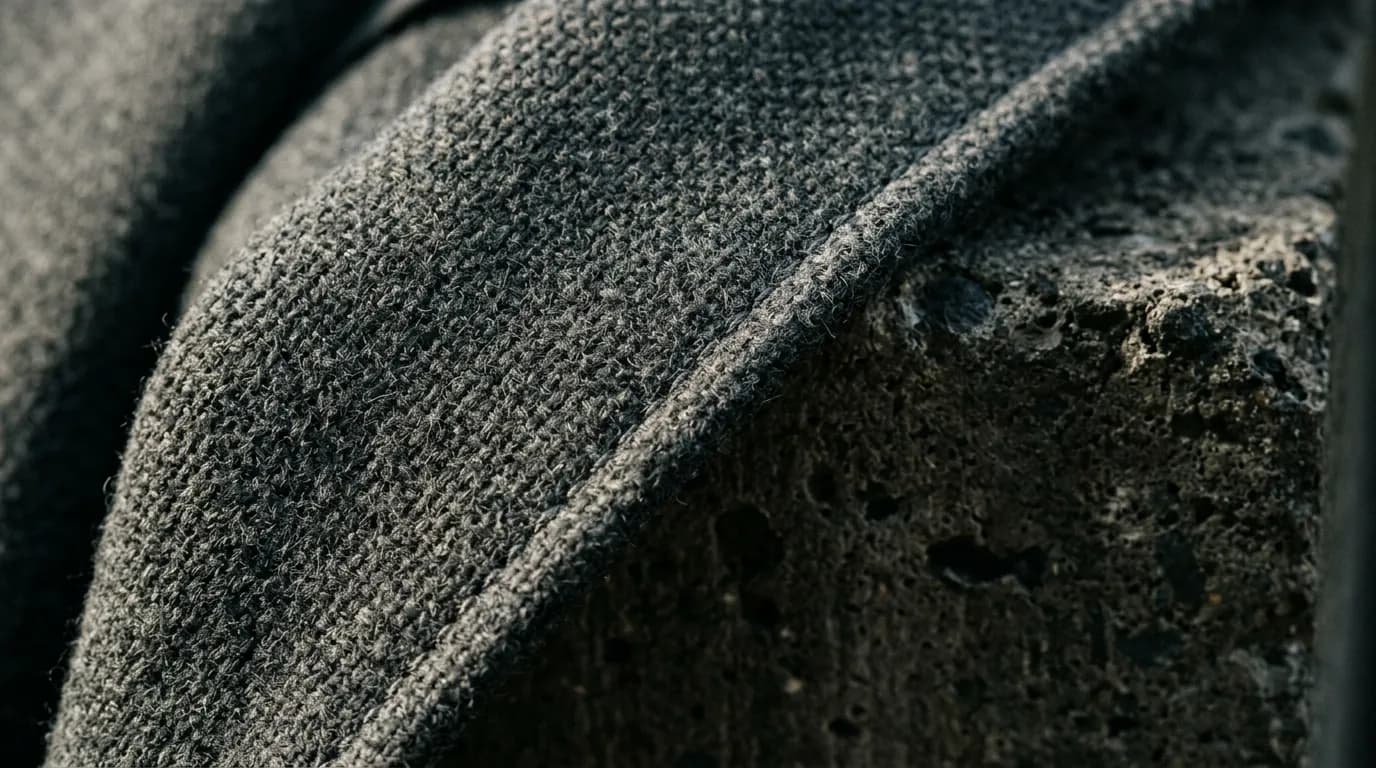
This approach fails because it copies a format built for Amazon and wholesale department stores, not high-converting direct-to-consumer storefronts. A pure white background strips away all environmental lighting contrast. It flattens the texture of heavy twill, hides the tactile weave of linen, and renders high-end wool overcoats indistinguishable from mass-market fast fashion polyester.
When a customer pays one hundred and fifty dollars for a structured garment, they are buying a visual identity and a physical feeling. A clinical white backdrop signals transactional utility rather than craftsmanship. It depresses perceived value and forces the consumer into price-comparison mode, where they search for cheaper alternatives within twenty seconds.
The Cognitive Gap in Mobile Merchandising
The underlying failure in fashion e-commerce is the cognitive gap between how founders view their products and how customers experience them on a smartphone screen. You know the exact hand-feel of your fabric, the tensile strength of the stitching, and the precision of the shoulder pads because you held the physical production sample.
Your customer has none of that tactile sensory data. On a five-inch mobile screen, all they possess is pixel contrast. If your hero image fails to convey structural rigidity, collar curvature, and natural fabric tension under real lighting, the shopper's brain automatically fills the sensory vacuum with doubt.
Here is the truth that e-commerce consultants rarely admit: your high bounce rate is almost never a pricing problem or an ad targeting issue. It is a visual confidence deficit caused by flat, sterile imagery that fails to communicate physical luxury.
Constructing an Optimal Visual Hierarchy
Fixing your product detail page requires restructuring your image carousel into an intentional visual narrative. The goal is not simply to display the garment; it is to eliminate every point of tactile friction in sequential order.
The primary hero image must establish emotional resonance and silhouette authority. It should present the complete look on a model within an architectural or atmospheric environment with natural, directional light. This anchors the perceived luxury tier of the piece immediately.
| PDP Slot | Standard Failing Approach | High-Converting Framework |
|---|---|---|
| Slot 1 (Hero) | Ghost mannequin or flat lay on white | On-model full look in atmospheric architectural setting |
| Slot 2 (Movement) | Static front-facing mugshot pose | Three-quarter walking pose showing drape dynamics |
| Slot 3 (Tactile) | Zoomed out back view with no detail | Macro close-up of fabric weave, lapel, and hardware |
| Slot 4 (Silhouette) | Repeat of front view with slight angle | Full back and profile view showing hemline and drop |
Following the primary hero shot, slots two and three must answer structural questions. The second image should capture movement—revealing how the fabric responds to human motion, whether the hem flows or holds rigid structure. The third slot should provide a macro close-up of the fabric grain, button hardware, and edge stitching. This close-up delivers the tactile verification the consumer needs to feel secure about product quality.
Quick Take on PDP Merchandising
- Ditch flat-lays in the hero slot: Flat-lays belong in technical specs or packing inserts, not as the primary first impression for a premium garment.
- Contrast creates perceived luxury: Directional raking light and subtle architectural shadows reveal fabric texture far better than blinding studio cyc lights.
- Macro proof builds cart confidence: High-resolution close-ups of seams and weave directly reduce return rates and increase add-to-cart conversions.
Scaling High-Converting PDP Assets with Modelfy
Producing four to six distinct, high-fidelity editorial angles for every SKU in an expanding fashion catalog was historically cost-prohibitive. Independent labels could not afford twenty-five thousand dollar production budgets every time they dropped twelve new styles.
This is precisely where Modelfy integrates into an e-commerce workflow. Rather than compromising with sterile warehouse photos or low-grade flat-lays, brands upload their standard product flat-lays or ghost mannequin captures. Modelfy's garment-preserving neural engine locks the seams, fabric texture, and structural contours without digital distortion, rendering them onto diverse, photorealistic models in curated editorial environments.
You generate the full suite of hero assets, movement shots, and atmospheric lifestyle frames in minutes. You elevate your storefront visual hierarchy to the level of luxury design houses, lifting conversion rates across your entire catalog while keeping production overhead flat.
The Next Phase of Storefront Merchandising
Over the coming twelve months, the standard for online apparel presentation will continue to climb. As generic AI image tools saturate social feeds with plastic-looking models and distorted garments, consumers will reward brands that demonstrate uncompromising visual craftsmanship and real fabric fidelity. The stores that scale will be those that treat their product detail pages as immersive editorial lookbooks, using high-impact hero photography to convert fleeting traffic into loyal, repeat customers.

Modelfy Team
Read More
Related Insights
Deep dive into more AI fashion photography guides and industry shifts from the Modelfy team.

Why a $5,000 Photoshoot Only Gives You 14 Days of Meta Ads
Meta algorithms burn fashion photoshoot assets in 14 days. Here is why creative velocity determines your ROAS and how to scale ad creative.
Stop Waiting for Factory Samples. It's Costing You $8,400 a Drop.
Waiting weeks for overseas factory samples is killing your store's momentum. Discover how garment-first AI cuts time-to-market by 90%.

Your New 'AI' Label Is Quietly Killing Storefront Trust
The mid-2026 EU AI Act mandates synthetic model disclosures on product pages. Discover how forced labeling destroys DTC trust—and how to navigate it.