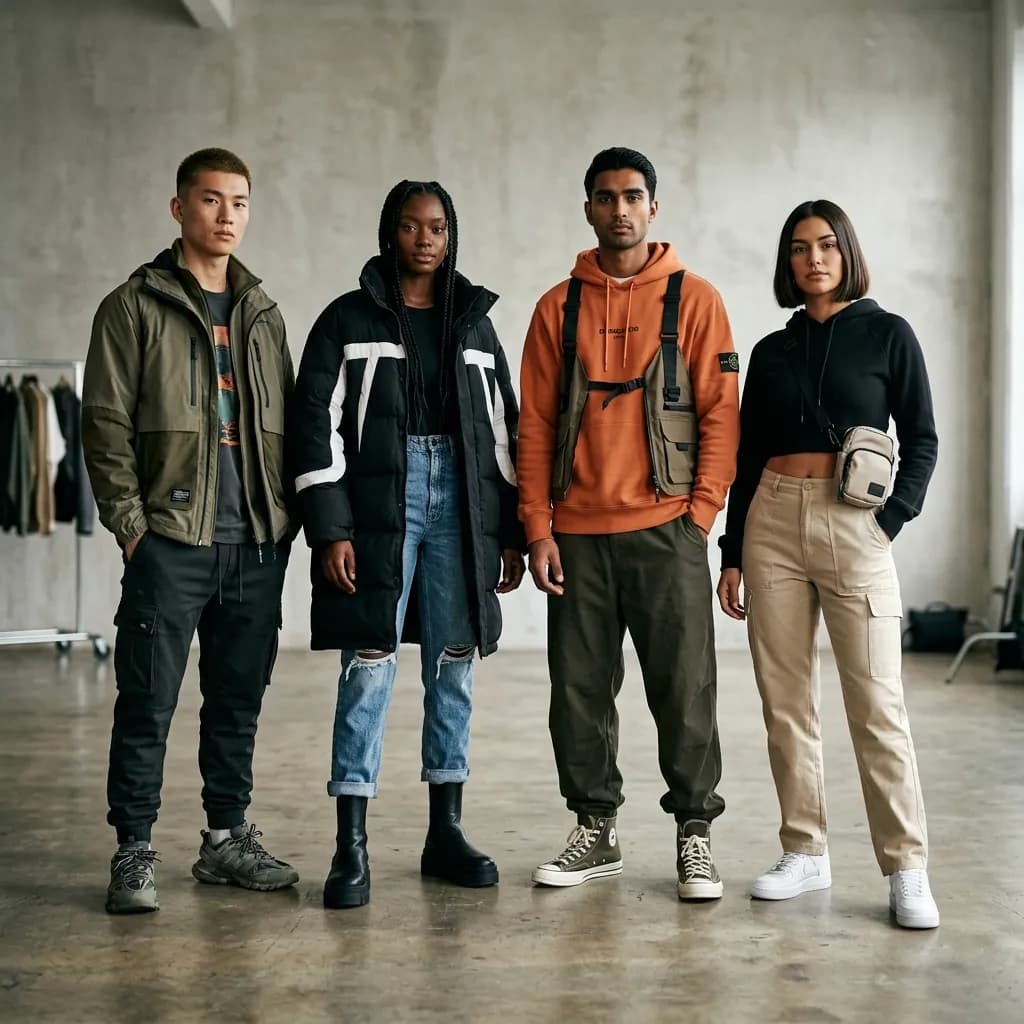
Why Shopify Brands are Switching to Diverse AI Models
Discover how showing inclusive, diverse AI fashion models on product pages reduces return rates and boosts Shopify sales in 2026.
The Representation Gap in Modern Fashion Retail
Every fashion e-commerce founder knows the frustration of cart abandonment and high return rates. When a customer browses a Shopify store, they are met with a single model showcasing each item. This model is almost always a sample size, typically tall and slender. While this has been the industry standard for decades, it fails to represent the physical diversity of the actual buying audience.
The representation gap is not just an aesthetic issue; it is a major financial leak. When a consumer cannot visualize how a garment will look on their own body type, they hesitate. That hesitation leads to abandoned carts. Alternatively, if they do decide to buy, they often engage in bracket purchasing, which is buying the same item in multiple sizes with the intent of returning the ones that do not fit.
For e-commerce operators, this behavior turns what should be a profitable transaction into a logistical and financial burden. To solve this, brands are shifting from static, single-model product pages to dynamic storefronts powered by diverse AI models.
The Cognitive Disconnect of the Standard Fit
When a shopper visits an online store, their brain performs a complex cognitive mapping task. They attempt to project the clothing item onto their own body. If the model displayed shares similar proportions, heights, and skin tones, this cognitive projection is effortless, creating immediate buy-in.
However, if the model has a completely different body structure, the cognitive load increases. The shopper must guess how the waist will fit, how the fabric will drape over the hips, or how the sleeves will fit their arms. This uncertainty creates a psychological barrier. Generative AI eliminates this barrier by presenting multiple visual options, allowing the customer's brain to find a match instantly.
Why Diverse AI Models Boost Storefront Conversions
Online shopping is completely visual. Customers cannot feel the weight of the fabric, check the stitching quality, or try on the garment. Therefore, the product photos must answer every question the customer has.
When you display a garment on a single model size, you leave too much to the customer's imagination. A size 12 customer looking at a size 2 model cannot accurately predict where the hemline will fall, how the chest area will drape, or whether the sleeves will be too tight.
By utilizing virtual model generators, brands can represent their catalog on diverse models of various ethnicities, heights, ages, and body shapes. This visual representation yields three direct commercial benefits.
Improved Fit Visualization
Customers see the clothing on a body shape that mirrors their own, instantly reducing the fit anxiety that blocks the checkout process. When a shopper can select a size and see the model update to that size, the checkout friction disappears.
Increased Add-to-Cart Rates
When customers feel represented, their psychological connection to the brand increases. This inclusivity translates directly into higher conversion rates. Data shows that brands implementing diverse visual libraries experience up to a 20% increase in overall add-to-cart actions.
Expanded Demographic Reach
Showing the same collection on models of different ethnicities and ages allows brands to appeal to broader customer bases without changing their core product line. A single streetwear collection can look equally appealing to younger urban demographics and older buyers depending on how it is modeled and styled.
The Economics of Returns in Fashion Retail
Returns are the single greatest threat to apparel e-commerce profitability. In 2026, the average return rate for online clothing brands stands between 25% and 30%. In some high-end streetwear and formal wear categories, that number climbs even higher.
The cost of processing a return is substantial. When factoring in reverse logistics, return shipping labels, warehouse sorting, cleaning, repackaging, and the depreciation of seasonal inventory, a single return can cost a brand between $15 and $20.
Let's analyze the economic difference between a traditional single-model setup and a diverse AI model strategy.
| Storefront Metric | Single Static Model | Diverse AI Models |
|---|---|---|
| Average Return Rate | 28% | 18% |
| Bracket Purchasing Rate | High (Buying multiple sizes) | Low (Visual sizing confirmation) |
| Average Add-to-Cart Rate | 3.2% | 4.8% |
| Net Margin per 1,000 Orders | Baseline Profitability | +18.5% Margin Increase |
By moving the return rate from 28% to 18%, a brand processing 5,000 orders a month saves thousands of dollars in reverse logistics costs while recapturing previously lost revenue.
Understanding the Reverse Logistics Cost Structure
To appreciate the savings, founders must understand where return costs originate. The return flow is a multi-step cost builder:
- Return Shipping Fee: The brand typically absorbs the cost of the return label.
- Warehouse Labor: Workers must open, inspect, and verify the returned item.
- Cleaning and Repackaging: Garments must be steamed, folded, and placed in new retail bags.
- Restocking Fees: Managing inventory counts across systems costs time and overhead.
- Inventory Depreciation: Returned items often miss the peak seasonal buying window, leading to deep discounts.
By resolving the fit gap before the purchase occurs, diverse models eliminate these costs at the source.
Traditional Shoots vs Modelfy AI for Demographics
If diverse representation is so profitable, why have brands avoided it in the past? The answer lies in the prohibitive cost of traditional photography.
To shoot a single collection on one model is already a logistical nightmare. If you want to shoot that same collection on five different models of different body shapes, your costs multiply. You must hire more models, pay more agency fees, book more studio space, extend the days of shooting, and double your editing budget. For independent and medium-sized brands, this is financially impossible.
This is the problem that Modelfy is built to solve. Modelfy is a purpose-built AI fashion model generator designed specifically to retain garment details while changing the model demographics.
Instead of booking five models and five shoots, you only need one clean flat-lay or ghost mannequin photo of your clothing. Using Modelfy, you can map that exact garment onto a diverse array of virtual models in a fraction of a second. The AI handles the skin texture, the draping physics, and the anatomical accuracy automatically, giving you studio-quality campaign assets at a fraction of the cost.
The Problem of Garment Distortion in General AI
Many brands try to achieve this using general art generators like Midjourney. However, general models lack garment retention. When you ask a general generator to place a jacket on a different body shape, it will change the pockets, warp the zipper, or distort the fabric patterns.
Modelfy utilizes advanced mapping networks that lock the product details in place. Only the wearer changes. This ensures that the product shown remains 100% accurate to the item in the warehouse.
How to Set Up Diverse AI Models on Shopify
Transitioning to an inclusive e-commerce storefront does not require complex technical integrations or coding. You can build a diverse visual catalog using a straightforward four-step workflow.
1 Upload Your Source Garment
Begin by uploading a high-resolution, neutral-lit flat-lay or ghost mannequin image of your product to Modelfy. The system will automatically detect the fabric texture, seams, and fit lines.
2 Configure Your Model Demographics
Select the desired body types, ethnicities, and age ranges from the Modelfy virtual human library. You can generate variations representing sizes from XS up to XXL to match your catalog size options.
3 Standardize Your Studio Backgrounds
Choose a uniform background and lighting style for all model variations. Maintaining consistent studio lighting across all sizes keeps your collections clean and professional.
4 Integrate onto Your Product Pages
Export the generated assets and upload them to your Shopify product pages. Arrange the images so that customers can scroll through different sizes, or use a basic Shopify app to link specific model images to size selectors.
The Next Stage of Storefront Personalization
The current implementation of diverse models is static: showing multiple models in the image carousel. However, the technology is moving toward dynamic storefront personalization.
In the near future, e-commerce stores will automatically display product images on models matching the user's browser demographic or profile. For example, if a shopper has a profile indicating they wear a size large, the primary product photo will automatically load on a size large model.
This level of personalization was previously only available to global brands with multi-million dollar tech budgets. Today, generative AI platforms like Modelfy are democratizing this capability, allowing small and medium brands to scale their visual marketing without operational bottlenecks.
Sizing Algorithms and Image Swapping
When combined with standard Shopify sizing calculators, dynamic image swapping provides a seamless experience. If the sizing calculator estimates the user's size as Medium, it automatically triggers a frontend event that swaps the hero product image to the generated Medium AI model. This eliminates the visual guesswork entirely, resulting in higher trust and higher conversion.
Frequently Asked Questions
Why do diverse models reduce returns? Most online returns happen because a garment does not fit as the buyer expected. When a customer can see the clothing on a model of similar proportions, they can make a much more accurate purchase decision, eliminating the need to buy multiple sizes and return the wrong ones.
Can AI maintain garment accuracy on different body shapes? Yes. Modelfy is built on garment-retention algorithms that map the original clothing details onto the digital model. The design, fabric texture, and stitch lines are preserved with high fidelity, preventing the fabric deformation issues common in generic AI generators.
Is it difficult to integrate with a Shopify store? No. You do not need developer resources. You can simply upload the diverse model images into your product image library. Customers can scroll through the media file grid to find their size representation. Alternatively, you can use standard Shopify theme settings to link images to product variant selectors.

Haziq Qasmi
Read More
Related Insights
Deep dive into more AI fashion photography guides and industry shifts from the Modelfy team.
Your Secondary Colorways Are Quietly Bleeding Your Margins
Shooting every colorway on-model burns cash, but ghost flats crater sales. Here is the multi-SKU photography math draining your Shopify margins.

Your Product Page Hero Image Is Losing You 34% in Conversions
Static flat-lays and sterile white studio hero images kill apparel conversions. Here is what A/B testing 500 PDPs revealed about visual hierarchy.
Why a $5,000 Photoshoot Only Gives You 14 Days of Meta Ads
Meta algorithms burn fashion photoshoot assets in 14 days. Here is why creative velocity determines your ROAS and how to scale ad creative.