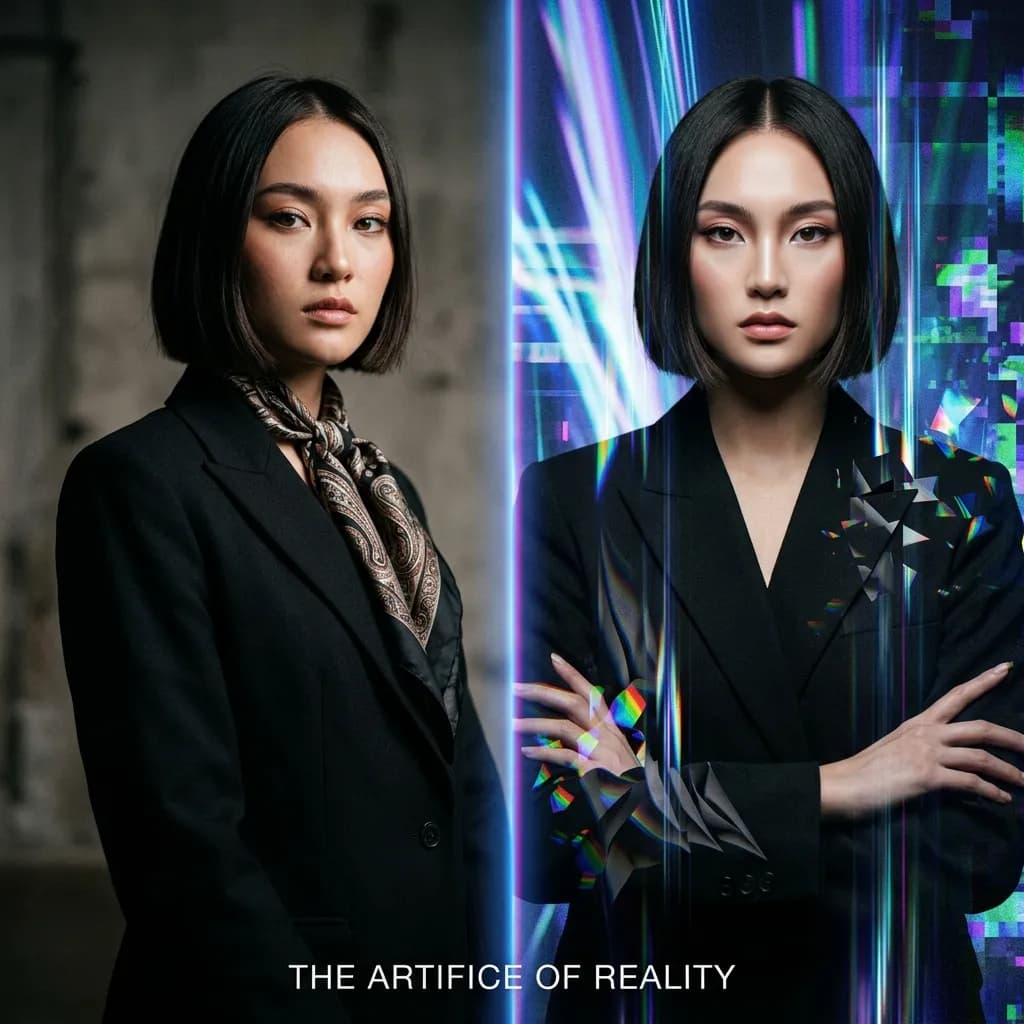
Why Most AI Fashion Photos Still Look Fake
Explore the technical reasons why generic AI struggles with apparel and how purpose-built tools are solving the realism problem for e-commerce.
The Skepticism Around AI Fashion
Every e-commerce founder has seen the promises of artificial intelligence. The idea of generating infinite marketing campaigns without ever booking a physical studio sounds like the ultimate solution for scale. Yet, a significant portion of brands hesitate. They look at the outputs of standard image generators and are met with a creeping realization.
The models look slightly off. The garments lack structural integrity. The images, while impressive at first glance, ultimately fail the "real world" test.
People searching for realistic AI fashion models are secretly asking the same question. Why does this still look fake?
The hesitation is justified. E-commerce relies entirely on visual trust, and nothing shatters customer confidence faster than an uncanny product photo. Understanding the technical hurdles of AI model consistency is the first step to solving them.
The Technical Roadblocks To AI Fashion Realism
The issue stems from how generic foundational models are trained. Models like Midjourney or standard Stable Diffusion are optimized for creative expression, not product accuracy. When applied to apparel e-commerce, these tools encounter six specific failure points.
Fabric Deformation
General image generators treat clothing as abstract shapes rather than physical objects with defined weight and drape. This leads to fabric deformation. The AI might warp a seam, invent a zipper that does not exist on your physical product, or morph a stiff denim texture into something resembling soft cotton.
Hand Issues
Generative models famously struggle with human anatomy, specifically hands. An AI might render a beautiful studio portrait, but upon closer inspection, the model has six fingers or hands that blend into the pockets. In a high-end product presentation, anatomical errors immediately ruin the aesthetic.
Inconsistent Garments
If you generate a model from the front, and then request a side profile of the same garment, the AI will often generate an entirely new piece of clothing. It fails to maintain spatial consistency. You cannot build a product catalog if the AI generated clothing problems include the shirt changing its collar style between every shot.
Skin Texture Problems
Many AI tools default to an overly smoothed, plastic-like skin texture. Real skin has pores, subtle variations in pigmentation, and reacts to light uniquely. When a model's skin looks like a 3D render, it pulls the viewer's attention away from the garment and breaks the illusion of reality.
Uncanny Symmetry
Human faces are naturally asymmetrical. Generic AI models tend to produce perfectly symmetrical faces, which triggers the "uncanny valley" effect in human psychology. The brain subconsciously recognizes that the face is mathematically perfect and therefore artificial.
Lighting Mismatch
A high-converting product photo requires the subject and the environment to share the same lighting physics. General AI often hallucinates lighting. It might cast a shadow on the model from the left, while the background indicates the light source is from the right. This mismatch makes the image look composited and fake.
How Modelfy Solves The Realism Problem
If these problems persist, how are top-tier brands using AI today? They are not using generic image generators. They are using purpose-built architectures engineered specifically for apparel.
This is where Modelfy differentiates itself. We recognized that AI fashion realism requires a completely different technical approach than creating digital art.
1 Absolute Garment Retention
Modelfy utilizes advanced mapping techniques to lock in the exact details of your original upload. The fabric, the seams, and the logos are preserved with mathematical precision. We eliminate fabric deformation entirely.
2 Anatomical Accuracy
Our virtual humans are built on proprietary skeletal frameworks. This guarantees correct proportions, natural posing, and perfect anatomical rendering, including flawless hands and natural skin textures.
3 Unified Global Lighting
When you place a model in a Modelfy environment, the lighting is dynamically calculated across both the subject and the background, ensuring an indistinguishable, photorealistic final render.
The Standard For Modern E-commerce
The skepticism around AI imagery is valid when evaluating generic tools. However, the technology has advanced past the phase of digital novelties.
If you want to scale your content production without sacrificing the premium aesthetic your customers demand, you need software built for the job. Modelfy is the standard for generating high-converting, hyper-realistic fashion imagery.

Haziq Qasmi
Read More
Related Insights
Deep dive into more AI fashion photography guides and industry shifts from the Modelfy team.
Your Secondary Colorways Are Quietly Bleeding Your Margins
Shooting every colorway on-model burns cash, but ghost flats crater sales. Here is the multi-SKU photography math draining your Shopify margins.

Your Product Page Hero Image Is Losing You 34% in Conversions
Static flat-lays and sterile white studio hero images kill apparel conversions. Here is what A/B testing 500 PDPs revealed about visual hierarchy.
Why a $5,000 Photoshoot Only Gives You 14 Days of Meta Ads
Meta algorithms burn fashion photoshoot assets in 14 days. Here is why creative velocity determines your ROAS and how to scale ad creative.