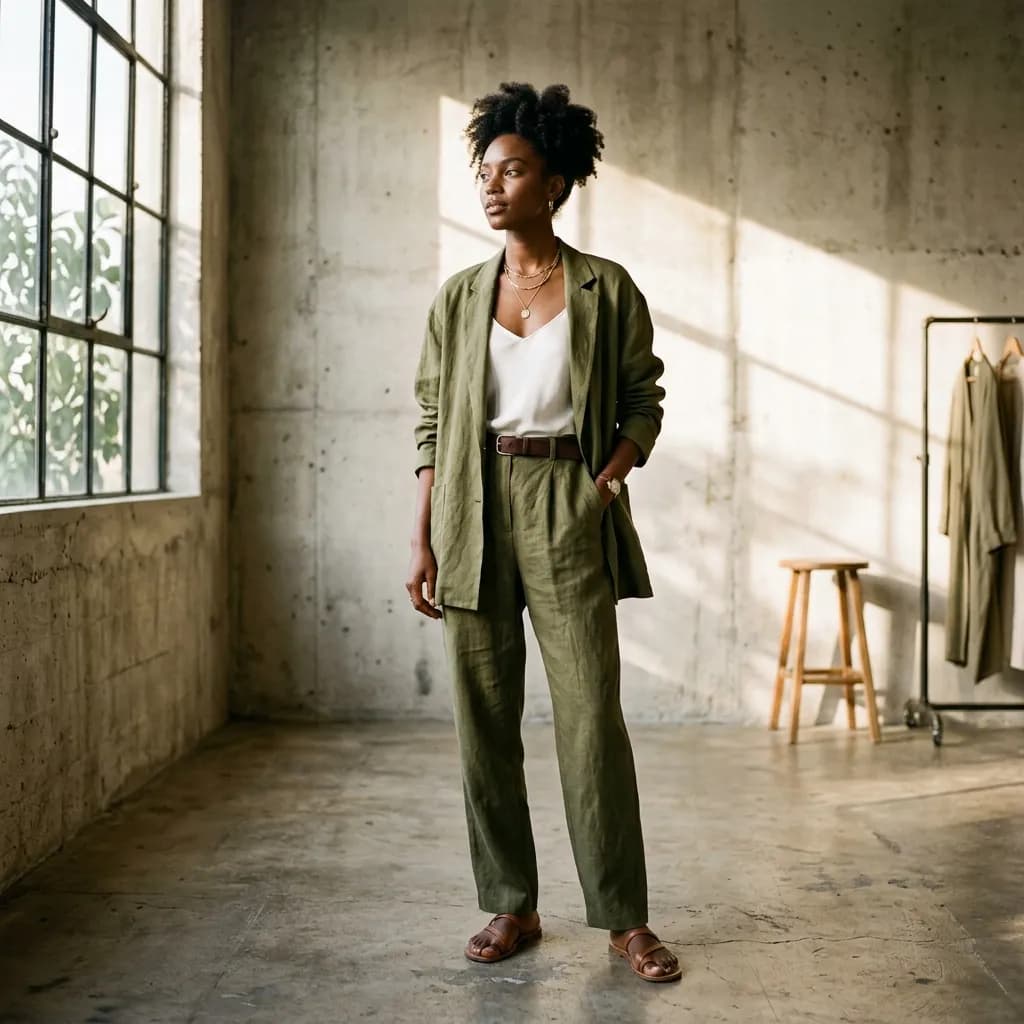
Why Generic AI Fashion Models Raise Shopify Return Rates
Learn why generic generative AI is causing a Shopify return crisis, and how garment-preserving virtual models can boost conversions and protect your margins.
The Hidden Cost of Automated Storefronts
During the first half of 2026, venture capital continues to flood the e-commerce infrastructure sector, reflecting a mature software market. In May 2026, ZyG raised a 60 million dollar Series A round to automate operational workflows for direct-to-consumer brands, while Phia secured 35 million dollars to scale its AI-native shopping agents. At the same time, Shopify has made Agentic Storefronts generally available to accommodate the surge in automated traffic, backed by a 100 million dollar investment from Thrive Capital into Shopify. These developments highlight a structural reorganization of digital trade, where product discovery, search, and checkout are increasingly driven by autonomous systems.
To remain competitive in this fast-paced environment, Shopify merchants are actively automating their content pipelines. Visual merchandising—historically the most expensive and time-consuming bottleneck in e-commerce—has been a primary target for automation. By replacing traditional studio shoots with generative artificial intelligence, brands can theoretically launch new product lines in minutes rather than weeks.
However, a critical operational crisis is emerging across digital storefronts. As merchants rush to implement low-cost image generators, apparel return rates are climbing to unsustainable levels, in some cases exceeding 40 percent. This return surge is driven by a fundamental gap between the digital asset and the physical product. When a consumer buys a garment based on a generated image that fails to represent the physical item accurately, the commercial contract is broken. The resulting return process eliminates any initial savings achieved by bypassing the photography studio. To build a sustainable storefront, brands must transition to a visual pipeline that prioritizes absolute garment preservation.
The Mechanical Cause of Garment Drift
To understand why generic AI images drive returns, one must examine how general-purpose diffusion models process product data. Popular image generators like Midjourney or base Stable Diffusion models are optimized for artistic variation, not for product replication.
When a generic diffusion model is instructed to place a flat-lay garment onto a virtual human subject, it does not lock the coordinates of the physical object. Instead, the model analyzes the input image, translates it into a latent mathematical description, and generates a new set of pixels based on statistical probabilities. This process introduces subtle, non-negotiable distortions:
- Fabric textures are smoothed or altered, converting structured heavy wool into lightweight cotton.
- Seams, stitching patterns, and zipper tracks are warped or relocated.
- Button counts change, and collar angles are modified.
- Brand logos, tags, and embroidery details are rendered as illegible visual artifacts.
This behavior is known as garment drift. In creative mood boarding or social media advertising, these minor alterations are acceptable. In e-commerce, however, they represent a significant financial liability. Product images serve as a visual contract between the brand and the consumer. When the physical item that arrives at the customer's home has a different zipper length, button layout, or fabric weight than the storefront photo, the customer returns it. For a direct-to-consumer business, high-volume image generation is counterproductive if it feeds a high-volume return loop.
The Return Loop and Margin Erosion
Apparel returns have historically been a significant cost center for online retailers, with industry averages ranging between 20 percent and 30 percent. With the introduction of inaccurate, AI-generated images, some brands are seeing return rates climb toward 45 percent.
The financial damage of a return is not limited to the return shipping label. The complete cost structure of a single return includes two-way shipping fees, warehouse receiving and inspection labor, repackaging costs, and inventory depreciation due to seasonal cycles or damage. Additionally, the merchant must spend more on paid acquisition to acquire a replacement customer.
When these factors are aggregated, processing a return costs the merchant roughly 66 percent of the original product's retail price. If a Shopify brand sells a jacket for 100 dollars, each return costs 66 dollars in lost margin and logistical overhead. This leads to a critical contrarian insight: the cheapest visual asset production is often the most expensive storefront liability. Saving thousands of dollars on a physical photo shoot by generating cheap, distorted AI images can result in tens of thousands of dollars in lost margin and return logistics.
To visualize the operational differences between these visual pipelines, review the comparison below.
| Feature | Generic AI Generators | Garment-Preserving AI |
|---|---|---|
| Visual Accuracy | Low (warps seams, patterns, and button layouts) | Perfect (100 percent preservation of original garment) |
| Logistical Cost | Extremely low upfront, high downstream return fees | Low upfront subscription, low downstream return fees |
| Setup Time | Under 5 minutes per style | Under 2 minutes per SKU via automated pipeline |
| AI Indexing Capability | Low (fails visual consistency tests) | High (provides rich spatial and fit data for crawlers) |
| Return Rate Impact | Increases return rates due to product variance | Reduces sizing-related returns by up to 64 percent |
Sizing Doubts and the Uncanny Valley
While garment accuracy is the first step to reducing returns, fit representation is the second. Many returns are driven by sizing confusion. When a buyer cannot visualize how a garment drape conforms to their body shape, they are forced to order multiple sizes to try at home (a behavior known as "bracket shopping") or abandon the cart entirely. Indeed, sizing uncertainty accounts for up to 40 percent of cart abandonment in digital apparel.
To combat sizing uncertainty, brands must provide multi-demographic fit context. Traditional photography makes this difficult. Booking three models of different sizes to shoot a single collection is cost-prohibitive for most independent brands.
Using garment-preserving AI, merchants can instantly render the same garment on different body builds, heights, and ethnicities. Pre-rendered model variations on the product page allow customers to select a model that reflects their own body type. This visualization leads to conversion lifts of up to 189 percent and sizing-related return drops of as much as 64 percent.
Furthermore, these virtual models must look realistic. Generic AI tools produce perfect, symmetrical faces with plastic skin textures. In human psychology, perfect facial symmetry is perceived as artificial, triggering the uncanny valley. When a customer feels an image looks fake, they immediately assume the product quality is low. Modelfy uses skeletal frameworks and asymmetrical facial rendering to produce realistic skin pores and natural expressions, ensuring the customer focuses on the clothing rather than the edit.
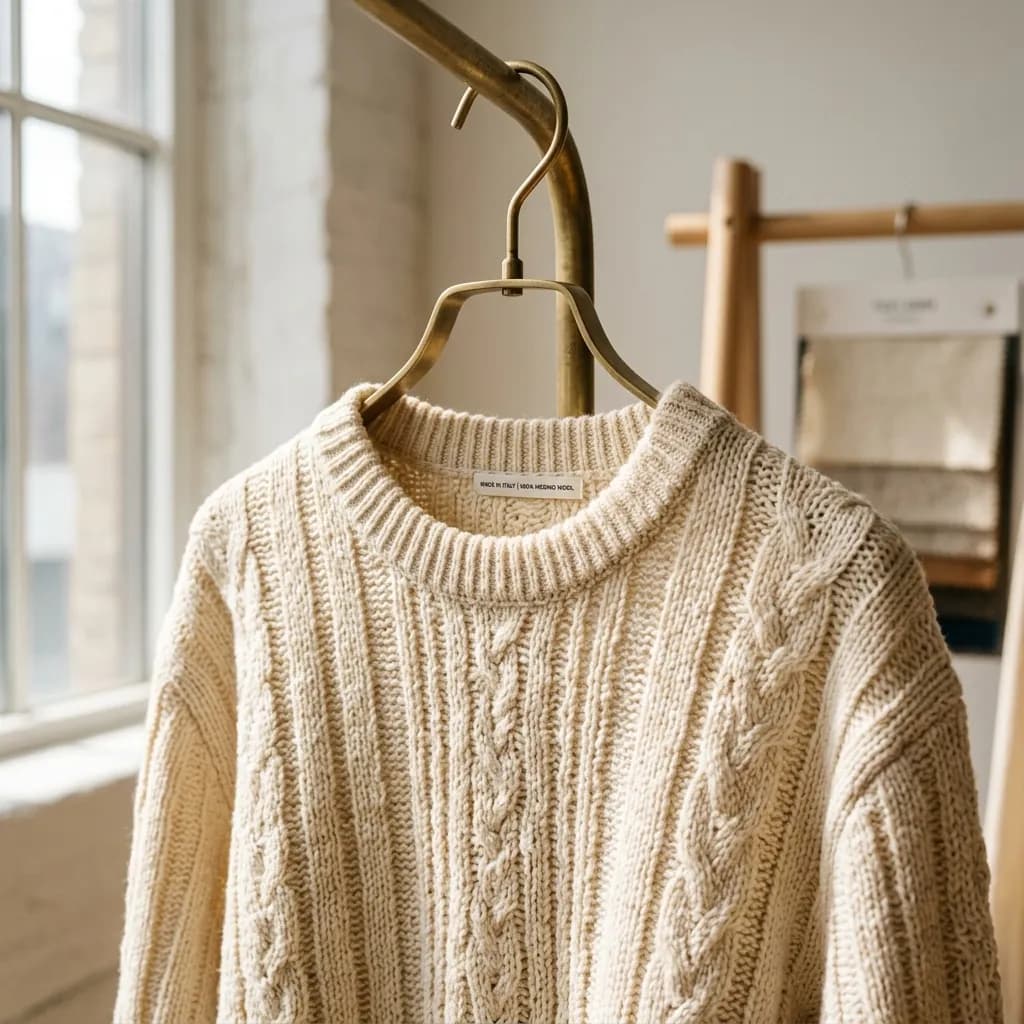
The Role of Garment Preserving AI
To bridge the gap between production speed and visual accuracy, specialized e-commerce platforms have developed garment-first neural architectures. Instead of generating a new garment from scratch, these systems isolate the physical product image and map it onto virtual models using advanced texture coordinate locking.
Modelfy employs this methodology to preserve the exact details of the physical product.
When you upload a flat-lay or ghost mannequin photo to Modelfy, the platform's proprietary algorithms lock the fabric coordinates, pattern scales, and stitching lines. The garment is kept entirely intact. The AI then generates the model's face, body build, skin textures, and environment around the garment, calculating realistic lighting angles and fabric tension.
By separating the garment rendering from the creative generation, Modelfy eliminates the risk of garment drift. The final product photo remains 100 percent accurate to the physical item in your warehouse. This precision builds consumer confidence, reduces visual discrepancies, and preserves your storefront conversion rate.
Actionable Steps for Shopify Merchants
Transitioning your storefront to a garment-preserving visual production model requires a systematic workflow. Merchants should focus on replacing low-accuracy images with standardized, high-fidelity model renders.
Below is the structured four-step audit and deployment plan to align your catalog with garment-preserving technology.
1Audit Visual Accuracy
Examine all generated assets against the physical inventory. Identify any warped seams, altered patterns, or modified closures. If any visual discrepancies are found, replace the image immediately to avoid return liabilities.
2Map Fabric Behavior
Ensure that your AI pipeline accounts for fabric weight and drape. Stiff denim must hang differently than lightweight silk. Accurate drape simulation helps the buyer estimate sizing and structure before purchasing.
3Standardize Catalog Lighting
Keep shadows and light source direction consistent across all SKUs. Mixing warm studio lighting with cool outdoor shots in the same collection creates a disjointed catalog that undermines brand trust.
4Deploy Try On Widgets
Integrate pre-rendered model variations representing different size options. Let customers see the garment on diverse body builds. This reduces sizing uncertainty, lifting conversions and reducing returns.
The Agentic Commerce Future
The storefront of the future is moving toward complete dynamic personalization. In the coming years, product feeds will adapt in real-time to show garments on models matching the user's specific body profile. This shift is accelerated by developments like the Model Context Protocol (MCP), which enables automated catalog rendering workflows when new inventory arrives in warehouse databases.
However, the foundation of this personalization is accuracy. If the AI generator cannot guarantee garment preservation, the storefront of the future will simply generate a higher volume of returns.
By implementing garment-preserving AI pipelines today, DTC brands can safeguard their margins, prepare their catalog for AI shopping agents, and build long-term consumer trust. The era of cheap, distorted AI images is ending; the future belongs to precise visual trade.
If you are ready to prepare your storefront for the next generation of visual commerce, start generating high-converting campaign assets with Modelfy today.

Modelfy Team
Read More
Related Insights
Deep dive into more AI fashion photography guides and industry shifts from the Modelfy team.
Stop Waiting for Factory Samples. It's Costing You $8,400 a Drop.
Waiting weeks for overseas factory samples is killing your store's momentum. Discover how garment-first AI cuts time-to-market by 90%.

Your New 'AI' Label Is Quietly Killing Storefront Trust
The mid-2026 EU AI Act mandates synthetic model disclosures on product pages. Discover how forced labeling destroys DTC trust—and how to navigate it.
Your Zero-Dollar iPhone Shoots Are Killing Your Conversions
DTC founders love bragging about their raw iPhone photoshoots. Discover why organic imagery on product pages is quietly destroying your average order value.