
The Gen Z AI Boycott Is Costing Shopify Brands Millions
An authenticity backlash is hitting fashion DTC. Discover why cheap AI fashion models trigger high-intent boycotts and how to navigate the aesthetic shift.
The High Price of Synthetic Perfection
During the first half of 2026, venture capital continues to flood the e-commerce infrastructure sector, reflecting a mature software market. In the first quarter of 2026, venture capital firms invested over 620 million dollars into e-commerce AI and retail automation startups. For instance, London-based Swap Commerce secured a massive funding round to scale return-management platforms, while Modelia closed a seed round to expand generative visual asset pipelines. These capital allocations highlight a structural shift toward automation.
However, direct-to-consumer fashion brands are facing an unexpected, costly roadblock: a consumer backlash against cheap-looking, generic artificial intelligence generated imagery. When Guess featured a campaign using entirely synthetic models in the August 2025 issue of Vogue, it triggered widespread social media criticism, canceled subscriptions, and boycotts. Consumers expressed frustration over the lack of transparency and the perceived displacement of real human workers. A similar crisis occurred in February 2026 when Gucci released synthetic promotional imagery for its Milan Fashion Week show, only to be mocked online by consumers who labeled the visuals "cheap AI slop."
This backlash is not merely a social media phenomenon. It represents a fundamental threat to digital retail. E-commerce is built on visual trust. When a brand uses low-quality synthetic media, it signals to the consumer that the physical product may be equally lacking in quality. For premium brands, the visual asset is the product. Compromising the aesthetic integrity of the storefront directly damages the brand's conversion rates and profit margins.
"Your customers do not hate artificial intelligence. They hate feeling like they are being lied to by a brand that wants them to spend three hundred dollars on a coat."
What is Actually Happening in the Feed
The Gen Z demographic, which commands over 360 billion dollars in purchasing power, is actively policing the brands they support. Online communities on Reddit and X have started maintaining lists of Shopify fashion brands that use cheap AI models, urging boycotts in favor of brands that use human photography. This "authenticity movement" has reached a point where some DTC fashion operators are now publishing "No-AI" disclaimers on their homepages to win back consumer trust.
This backlash is driven by a rapid escalation in the consumer's ability to detect synthetic media. The average online buyer no longer needs to look for six-fingered hands. They recognize the hyper-smooth, plastic skin textures, the mathematically perfect facial symmetry, and the inconsistent lighting physics that define cheap AI generators. When these elements appear on a product page, the brand's perceived value drops instantly.
For premium fashion brands, the return loop is already a massive operational burden. Apparel returns on Shopify typically average between 20 and 40 percent. According to retail statistics, sizing and fit uncertainty are responsible for up to 75 percent of these returns. When brands introduce visual discrepancy by using generic AI tools that warp seams, fabrics, and collar widths, they compound the problem. Processing a single return costs the merchant between 10 and 65 dollars in logistics, inspection, and repackaging. Ballooning these return rates with poor imagery is a fast path to margin erosion.
Why the Obvious Fix Fails
The immediate reaction of many DTC founders to this backlash is to pull the plug on AI entirely and revert to traditional photography. They call up local agencies, book models, and hire studios. They spend 5,000 to 15,000 dollars on a single day of shooting, wait three weeks for retouching, and end up with exactly 20 usable photos for a single collection.
While this solves the authenticity problem, it creates a massive scaling bottleneck. In 2026, fashion retail requires high-velocity content production. A premium brand needs unique visual assets for catalog listings, Instagram ads, email newsletters, and TikTok lookbooks. Reverting entirely to the slow, expensive traditional photography pipeline makes it impossible to compete with agile brands that release fresh collections every fortnight.
Furthermore, traditional shoots do not solve the sizing dilemma. It remains financially impossible to hire models of five different body types for every single product listing. As a result, brands continue to showcase their garments on a single sample-size model. The consumer is still forced to engage in return-heavy bracket shopping—ordering multiple sizes of the same SKU because they cannot visualize how the fabric drape adjusts to their specific body shape.
The Real Problem is Garment Distortion
The core issue isn't the use of artificial intelligence. It is the use of generic AI engines that do not respect the physical structure of clothing. When a brand uses a general image generator like Midjourney or a basic diffusion model, the software reinterprets the garment. The algorithm does not understand what a seam, a collar, or a zipper is. It simply attempts to match a statistical pattern of pixels.
This results in a phenomenon known as garment drift. The generated image shows a blazer, but the lapel is wider, the pockets are shifted by two inches, and the fabric texture looks like polyester instead of raw silk. When the customer receives the physical item, they immediately notice the discrepancy. This is a visual breach of contract. The return is inevitable.
To protect margins, Shopify brands must separate creative background generation from product replication. The product itself must remain 100% physically accurate, while the surrounding environment, model face, and lighting are dynamically rendered. This requires a spatial mapping pipeline that treats the garment as a rigid-deformable mesh, preserving the original coordinates of every stitch, button, and print.
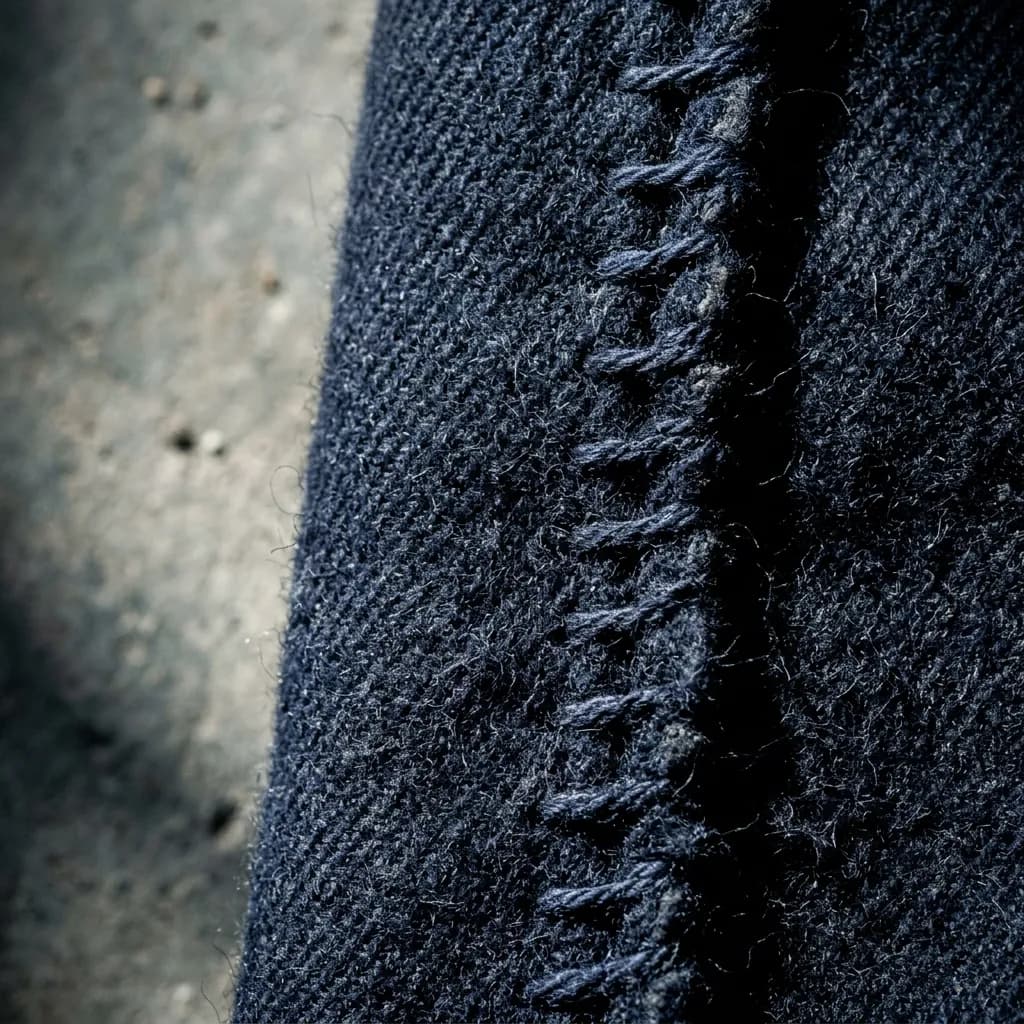
Comparing E-Commerce Visual Assets
To understand how different visual production methods impact e-commerce operations, consider the comparative metrics below.
| Metric | Generic AI Renders | Traditional Shoots | Garment-Preserving AI |
|---|---|---|---|
| Product Fidelity | Low (warps seams, logos, textures) | Perfect (exact camera capture) | Perfect (100% detail mapping) |
| Aesthetic Perception | Synthetic (often flagged as AI slop) | Premium (human artistry) | Premium (photorealistic and authentic) |
| Anatomical Accuracy | Variable (six fingers, plastic skin) | Perfect (real human subjects) | Realistic skin pores and proportions |
| Return Rate Impact | High return rates due to discrepancies | Baseline industry return rate | Reduces sizing returns up to 40% |
What This Means for Your Brand
If you are operating a premium Shopify store, you can no longer afford to ignore the visual demands of Gen Z. You cannot use generic AI models to showcase your products, and you cannot afford to return to the slow, capital-intensive photoshoot methods of 2018.
First, establish visual integrity by running an audit of your storefront. If you are using generated images, compare them directly to your physical inventory. If a seam is warped, a button is missing, or the fabric texture looks synthetic, pull the image. The immediate conversion lift from a generic AI model is not worth the long-term margin erosion of a 40% return rate.
Second, embrace the "Work-in-Progress" design trend. Gen Z consumers respond positively to raw, unpolished, behind-the-scenes content that highlights craftsmanship. Pair your high-fidelity product imagery with close-up flat lays and fabric detail shots. This combination provides the visual reassurance that the garment is real, high-quality, and structurally sound.
Quick Take: Surviving the Backlash
- Audit your assets: Instantly remove any generated storefront photos with warped lapels, floating pockets, or distorted logos.
- Emphasize fabric weight: Use extreme macro shots to show the weave, drape, and stitch patterns of your materials.
- Standardize lighting physics: Maintain consistent shadows across your collection to avoid the visual dissonance of generic studio composites.
How High-Fidelity Tools Bridge the Gap
This is where specialized platforms like Modelfy fit into the modern B2B ecosystem. Rather than generating a model and hoping it resembles your product, Modelfy operates on a garment-first architecture.
The software takes your actual physical garment photo—preserving every stitch, logo, and seam line with absolute accuracy—and maps it onto photorealistic, anatomically correct models. The skin texture includes natural pores, the lighting is dynamically calculated to match the background environment, and the garment drape is preserved. It gives you the cost-efficiency of generative software without triggering the authenticity alarms of modern consumers.
The Outlook
Over the next 12 months, e-commerce discovery is moving toward complete visual personalization. Product feeds will adapt in real-time to render garments on models matching the user's specific body build and height.
However, the foundation of this personalized future remains fidelity. If the AI generator cannot guarantee garment preservation, dynamic storefront personalization will simply generate a higher volume of product returns. Brands that implement garment-preserving AI pipelines today are not only safeguarding their current profit margins, but also preparing their catalogs for the future of automated retail.
If you are ready to elevate your visual merchandising and build a high-converting catalog, start generating high-converting campaign assets with Modelfy today.

Modelfy Team
Read More
Related Insights
Deep dive into more AI fashion photography guides and industry shifts from the Modelfy team.

Why a $5,000 Photoshoot Only Gives You 14 Days of Meta Ads
Meta algorithms burn fashion photoshoot assets in 14 days. Here is why creative velocity determines your ROAS and how to scale ad creative.
Stop Waiting for Factory Samples. It's Costing You $8,400 a Drop.
Waiting weeks for overseas factory samples is killing your store's momentum. Discover how garment-first AI cuts time-to-market by 90%.

Your New 'AI' Label Is Quietly Killing Storefront Trust
The mid-2026 EU AI Act mandates synthetic model disclosures on product pages. Discover how forced labeling destroys DTC trust—and how to navigate it.